
Scent marketing arrived in Saudi Arabia through hospitality, and hotels still set the standard. But the fastest-moving demand now sits in retail — flagship stores, mall atriums, showrooms and corporate lobbies, where operators have realised that an unscented space is a missed impression. Retail, though, is not a hotel lobby, and treating it like one is the most common and most expensive mistake. This guide covers what actually works.
What scent does in a retail environment
A signature scent gives a store something a logo cannot: a presence customers register before they consciously look at anything. It marks the threshold between the mall walkway and your brand, it makes a space feel maintained and considered, and — used consistently — it becomes recognisable across every branch you operate.
The commercial argument is straightforward. Scent extends dwell time, and dwell time is the input to almost every retail metric that matters. A customer who stays longer sees more, touches more, and buys more.
That logic holds throughout a mall right up to the food court, where it inverts. A restaurant or café already owns the most persuasive aroma in the building, and adding ambient fragrance over it competes with the thing that sells the meal.
Retail is not a hotel lobby
Hotel scenting solves a slow problem: guests pass through a lobby repeatedly over several days, so the scent must be extremely subtle and completely consistent. Retail solves a fast one. Most customers are in your space for minutes, many for seconds, and the scent has to register in that window without becoming oppressive to staff who stand in it for nine hours.
That difference drives every decision. Retail intensity is generally higher than hospitality, but the tolerance for getting it wrong is much lower — because your staff, not your customers, are the ones who will feel an over-scented room.
Mapping scent to store zones
The threshold
The entrance carries the most weight. In a mall, this is where your brand separates itself from the neutral, air-conditioned corridor outside. Intensity should be at its highest here, and it should be the zone you tune first.
The main floor
The selling floor needs even, unobtrusive coverage. Uneven scenting — strong near a unit, absent twenty metres away — reads as a malfunction rather than an atmosphere. This is where diffuser placement and airflow matter far more than raw output.
Fitting rooms and checkout
These are decision points, and they are usually enclosed. Keep intensity lower than the main floor: a small, poorly ventilated room concentrates fragrance quickly, and a customer trying on clothes is the last person you want to overwhelm.
Malls, single stores and the tenant problem
A standalone store controls its own air. A mall unit does not. Your scent meets your neighbour’s at the threshold, and mall management may have rules about diffusion into common areas.
Two practical consequences. First, keep your scenting inside your own footprint and let the threshold do the branding work rather than pushing fragrance into the walkway. Second, if you are the mall operator scenting an atrium, choose something deliberately neutral and architectural — the atrium scent has to coexist with dozens of tenant scents, food courts and heavy foot traffic.
Equipment and coverage
Coverage, not fragrance, is what most retail programmes get wrong. A unit sized for a boutique cannot scent a showroom, and 1,200 square metres of open floor behaves nothing like 1,200 square metres divided into rooms. Ceiling height and airflow matter as much as floor area.
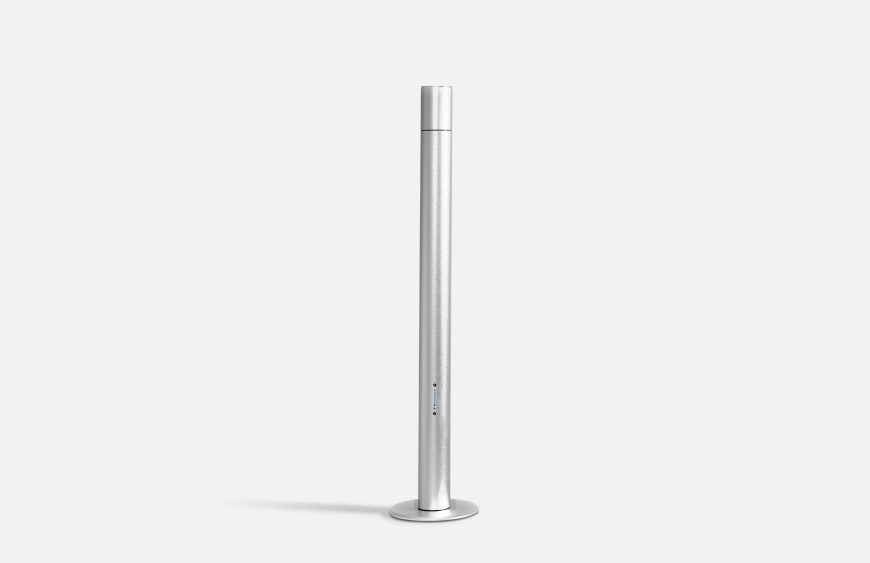
For smaller units and enclosed zones, a cold-air diffuser such as the Aromax handles the space directly. For large-format retail, atriums and multi-zone sites, the AroSlim is built for that scale and can be integrated with existing HVAC so the scent moves with the air the building already circulates.
Running a programme that lasts
The stores that get long-term value from scent treat it as infrastructure, not decoration. That means a fixed fragrance oil chosen for the brand rather than seasonal whim, consistent intensity across branches, and a refill and maintenance schedule that does not depend on a staff member remembering.
The failure mode is always the same: a scent programme launches well, cartridges run dry, nobody notices for three weeks, and the brand quietly loses the thing it paid for. If you operate multiple locations, the same scent at the same intensity everywhere is the entire point — a customer should not be able to tell your Riyadh and Jeddah branches apart with their eyes closed.
If you also run hospitality spaces, our guide to scent marketing for hotels in Saudi Arabia covers the guest-experience side in detail.
Two practical follow-ups: what scent marketing costs in Saudi Arabia sets out the device price and the monthly fragrance figure, and our method for choosing a scent for your business covers selecting the fragrance itself.
Scenting a commercial space?
Tell us your floor area and the type of venue, and one of our scent consultants will come back to you within one business day with a system recommendation, fragrance options and the monthly running cost — in writing, with no obligation.
Frequently asked questions
How strong should a retail scent be?
Noticeable at the entrance, barely registering after a few minutes on the floor. Tune it with your staff, not on opening day — they are the ones exposed to it longest.
Should each branch have a different scent?
No. Consistency is what turns a pleasant smell into brand recognition. Vary intensity by space size, never the fragrance itself.
Can scent be added without changing the HVAC system?
Yes. Standalone cold-air units scent zones directly and need no ductwork. HVAC integration is worth it for large or multi-zone sites where even coverage is difficult to achieve otherwise.
