An exhibition stand has a few seconds to make a visitor slow down, and then it has to be remembered among a hundred other stands by the time that visitor gets back to the office. Exhibitors in Riyadh, Jeddah and Dammam ask us whether fragrance helps with either. The research says it can help with the second, under conditions an exhibition hall rarely provides. This guide explains what the studies found, why a hall works against you, and how to set up a stand so the scent actually reaches the people you want to remember you.
What the research supports
Ambient scent and brand memory
The most relevant study is Maureen Morrin and S. Ratneshwar’s Does It Make Sense to Use Scents to Enhance Brand Memory?, published in the Journal of Marketing Research in 2003 (volume 40, issue 1, pages 10–25). Participants evaluated photographs of familiar and unfamiliar brands on a computer while a diffuser scented the room, or did not. Twenty-four hours later they were tested on which brands they could recall and recognise.
In both of the two studies, ambient scent improved recall and recognition of both familiar and unfamiliar brands. It worked whether or not the scent suited the product category. The second study showed that what mattered was the scent being present while people first looked at the brands, not while they were trying to remember them. The scent did not change how people said they felt. It did make them spend longer looking at each product, measured covertly, and the authors concluded that attention was the most likely explanation.
That is a useful finding for an exhibitor, because longer attention and better next-day recall are what a stand is for. Read the conditions too. It was one quiet room with one scent, photographs on a screen, and a test the following day. An exhibition hall is none of those things.
Scent on the product beats scent in the air
A later study by Aradhna Krishna, May Lwin and Maureen Morrin, Product Scent and Memory (Journal of Consumer Research, 2010, volume 37, issue 1, pages 57–67), compared the two. When the product itself carried the scent, recall of the brand’s other attributes rose significantly, and the effect lasted as long as two weeks. Scent on the product was more effective than scent in the room. The authors’ explanation is that the associations attach to a single object instead of spreading across the whole environment.
For a stand, that suggests something exhibitors rarely try. A scented item the visitor carries away, such as a fragrance card, a brochure or a sample, may do more for memory than scenting the air. The air sets the impression on the stand. The object goes back to the office.
Why an exhibition hall works against you
Most stands are open on two or three sides
A shell-scheme stand of 3 by 3 metres has walls on one or two sides and an aisle on the others. Above it is the hall’s own ceiling, often ten metres or more, with a ventilation system designed to move a very large volume of air. Fragrance released on an open stand does not stay there. It thins out into the aisle almost at once.
Your neighbours are doing the same thing
Perfume houses, coffee roasters, food stands and other fragrance companies may all be in the same hall. Two diffused scents a few metres apart do not combine into anything pleasant. If your stand sits beside a food area, scenting is likely to be wasted.
The hall smells of the build
On opening day many halls still smell of paint, adhesive, new carpet and cut board from the build-up. A fragrance added to that does not mask it well, and it can make the mix worse. Do not run a diffuser during build-up. Ventilate the stand as much as you can before the doors open.
The organiser has rules
Exhibitor manuals often restrict anything that affects neighbouring stands, including noise, light and smell. Read yours before you plan anything, and ask the organiser if the manual is silent. A complaint from the stand next door on the first morning is a poor start to a show.
Scent the enclosed parts, not the aisle
The practical answer is to scent the parts of the stand that hold air. Most medium and large stands have one: a closed meeting room, a VIP lounge or a semi-enclosed demonstration area. That is where serious conversations happen and where visitors sit long enough to register a scent.
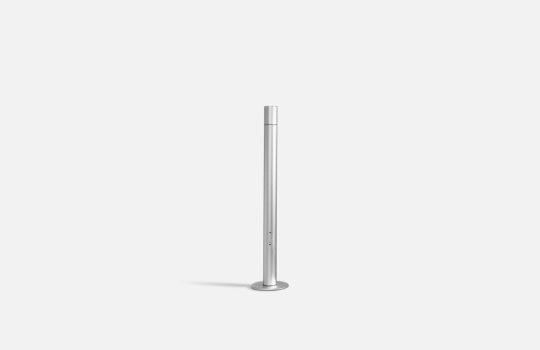
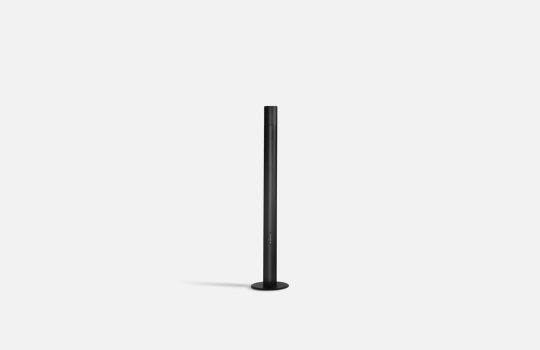
The volumes are small. A meeting pod of 3 by 3 metres with a 2.7-metre ceiling holds about 24 m³. That is a tenth of the 250 m³ rating of an Aromax, so run it on its lowest setting with short intervals, or the room will be overpowering within an hour. An enclosed custom-built stand of 10 by 6 metres with a 4-metre ceiling and a closed top is about 240 m³, still within one Aromax. Only very large closed pavilions approach the 1,000 m³ of an AroSlim. Our diffuser sizing guide has the full calculation.
On an open stand, place the unit at the back wall, away from the aisle and out of reach, and keep it low. The aim is a scent people notice when they step onto the stand, not one that stands opposite can smell.
Choosing the fragrance
Morrin and Ratneshwar found the memory effect held whether or not the scent fitted the product, so you do not need a fragrance that literally smells of what you sell. What you need is a scent that fits the brand’s character and that you can use again: at the next show, in your showroom and on your printed material. Our guide to choosing a scent for your business starts with the attribute you want to communicate and translates it into a fragrance family.
Two constraints are specific to shows. Keep it simple, because a complex blend gets lost in a hall that already smells of many things. And avoid heavy, warm notes on a busy stand. Research we discuss in our showroom scenting guide found that warm scents such as cinnamon and vanilla make a space feel more crowded, which is the opposite of what a packed stand needs. A clean citrus, green tea or a light woody note travels better.
Logistics that get forgotten
Power is not automatic. On most shows each socket on a stand is ordered from the organiser in advance, so include one for the diffuser. Bring a spare bottle: a full show day with long opening hours uses oil faster than an office does. Mount or place the unit where visitors and children cannot knock it over, and where its outlet is not aimed at a seat. Start it shortly before opening and stop it at closing. Staff stop noticing a scent within minutes, as we explain in our article on why you stop noticing smells, so they should not be the ones who decide it needs turning up. Ask someone arriving from the aisle.
How to tell whether it helped
You will not get a controlled experiment out of one show, and nobody should promise you a figure. You can still collect useful signals. Note how long visitors stay in the meeting area. In your follow-up calls, ask contacts which stands they remember from the show before you mention your own. If you exhibit at the same event every year, change one thing at a time so you can compare. A scented takeaway gives you a second check: ask whether the card is still on the desk.
What we will not claim
We will not tell you scent increases leads by a percentage. The studies above measured brand recall in controlled rooms, not sales at trade shows, and no published figure we know of covers that. What the evidence supports is narrower and still worthwhile: scent present while someone first meets your brand can help them remember it the next day, and scent attached to something they keep can help for longer.
Scenting a commercial space?
Tell us your floor area and the type of venue, and one of our scent consultants will come back to you within one business day with a system recommendation, fragrance options and the monthly running cost — in writing, with no obligation.
Frequently asked questions
Does scenting an exhibition stand help visitors remember the brand?
The evidence suggests it can. A 2003 Journal of Marketing Research study found that ambient scent present while people first viewed brands improved their recall and recognition the next day, mainly by holding their attention longer. That study used a single quiet room, so expect a weaker effect in a busy hall.
Is it better to scent the air or to hand out scented material?
Both have a place. A 2010 study found that scent carried on the product improved memory for brand information more than scent in the room, with effects lasting up to two weeks. Scent the enclosed parts of the stand, and consider a scented card or sample that visitors take away.
Can I use a diffuser on an open shell-scheme stand?
You can, but most of the fragrance will disperse into the aisle and the hall’s ventilation. Place the unit at the back wall on a low setting, check the organiser’s rules first, and put most of your effort into any enclosed meeting area.
What size diffuser does an exhibition stand need?
Usually a small one. A closed meeting pod of about 24 m³ is a tenth of an Aromax’s 250 m³ rating, so run it on its lowest setting. Only large enclosed pavilions approach the 1,000 m³ rating of an AroSlim.
Are there rules about using fragrance at exhibitions?
Often, yes. Many exhibitor manuals restrict anything that affects neighbouring stands, including smell. Read the manual before the show, ask the organiser if it is unclear, and order a power socket for the diffuser in advance.