Cooking Smells in the House: Range Hoods, Frying and Fish, and What Actually Clears Them
In most Saudi homes the kitchen works hard: large family meals, a lot of frying, whole spices toasted in oil, fish on the weekend, and guests who arrive while the food is still cooking. The smell does not stay in the kitchen. It moves into the majlis and the bedrooms, settles into curtains and cushions, and is still there the next morning. This guide explains what the research on kitchen extraction shows, why most range hoods remove far less than people assume, and the habits that actually keep cooking smells in the kitchen.
Why cooking smells travel and linger
Cooking releases two things at once: gases, which carry most of the aroma, and fine particles, many of them droplets of oil. The hotter and faster the cooking, the more of both. Deep-frying and high-heat stir-frying produce far more than simmering or baking. The gases follow the air through the house. The oily particles settle on whatever they reach, and fabric holds them, which is why a sofa or a curtain can smell of last night’s dinner long after the air has cleared. We explain that second problem, which cooking shares with smoke, in smoke smell in the house.
That gives you two jobs: catch as much as possible at the cooker, and stop the rest from spreading. Fragrance comes a distant third.
What the research on range hoods shows
Most hoods move less air than the box says
The most useful work on this comes from the Lawrence Berkeley National Laboratory in the United States. Brett Singer and colleagues measured 15 cooking exhaust devices as they were actually installed in homes (Indoor Air 22(3), 224–234, 2012). For 10 of the 15, the maximum measured airflow was 70% or less of the figure in the product literature. Devices with a flat bottom and no capture hood, including the combined microwave-and-extractor units common over cookers, captured much less than proper hoods at similar airflow.
The back burner and the high setting do most of the work
Two variables mattered more than the brand. First, the burner: for almost every device, capture was substantially higher when cooking on the back burners than the front, because the hood sits over the back of the cooker. Second, the airflow: about 95 litres per second (200 cubic feet per minute) was necessary, but not sufficient, to capture more than 75% from a front burner. The catch was noise. Every device tested for sound exceeded 56 dB on its highest setting, loud enough that many people turn it down.
A follow-up study by Melissa Lunden, William Delp and Brett Singer tested how well four hoods captured particles from real cooking (Indoor Air 25(1), 45–58, 2015). Pan-frying on a back burner at medium heat was the easy case, with capture mostly above 80%. Stir-frying in a wok on a front burner at high heat was the hard one. On the low fan setting the hoods captured only 3–11% of the fine particles; on high, 16–70%. The cooking that produces the most smell is exactly the cooking a hood catches worst.
Most people do not switch it on
The same group monitored 54 houses and 17 apartments in California for a week each (Zhao et al., International Journal of Environmental Research and Public Health 17(23), 8870, 2020). Range hoods were used for only 36% of cooking events in houses and 28% in apartments, and actual use was far lower than residents had said in a survey beforehand. People were more likely to use the hood the longer they used the cooktop, and not at all more likely for the oven.
These studies were carried out in American homes, but the physics of a hood does not change with the country. What will differ is the cooking, and a kitchen that fries daily is more demanding than the ones measured.
Habits that keep the smell in the kitchen
At the cooker
- Cook on the back burners whenever the pan fits, especially for frying.
- Use the high setting for frying, searing and anything in a wok. The low setting is for simmering.
- Switch the hood on before you start, and leave it running for a while after you finish. The air in the kitchen is still full of aroma when the pan comes off the heat.
- Use lids. A covered pan releases less into the room.
- Clean or replace the grease filters on schedule. A clogged filter cuts airflow, and the grease on it becomes a smell source of its own every time the cooker warms it.
Know which kind of hood you have
A ducted hood sends air outside. A recirculating hood, common in flats where ducting is hard, passes the air through a grease filter and usually a charcoal filter and blows it back into the kitchen. It can trap grease and some odour, but it does not remove air from the house, and a saturated charcoal filter does very little. If yours recirculates, change the charcoal filter as the manufacturer says, and rely more on the window and the kitchen door.
Around the kitchen
- Close the kitchen door while cooking and for a while afterwards, so the hood is pulling from one room, not the whole house.
- Open a window in the kitchen, not in the next room, so outside air replaces what the hood removes rather than air drawn through the house.
- Many villas have a second, outdoor or utility kitchen. If yours does, it is the right place for deep-frying and fish.
- Empty the bin and run the sink drain with hot water on the same evening. They hold the smell long after the cooking has stopped, as we cover in why you stop noticing home odours.
Fish, frying oil and spices
Fish is the smell people ask about most. Wash boards, knives and the sink straight after preparing it, and wipe down the hob and the splashback once they are cool. Re-used frying oil smells stronger each time it is heated, so change it more often than you think you need to. Whole spices toasted in oil smell wonderful in the pan and stale the next morning in the curtains; that is a reason to run the hood on high when you temper spices, not to toast fewer of them.
Where fragrance fits
Fragrance does not remove cooking smells, and diffusing it in the kitchen while you cook only puts two strong smells in the same room. Its place is afterwards and next door. Once the kitchen is ventilated and the bin is out, a diffuser in the living area or the majlis gives the rest of the house a clean, deliberate scent for when guests arrive. Fresh profiles such as citrus, green tea or light herbal notes sit well alongside a home that cooks a lot, and our fragrance collection is grouped by family.
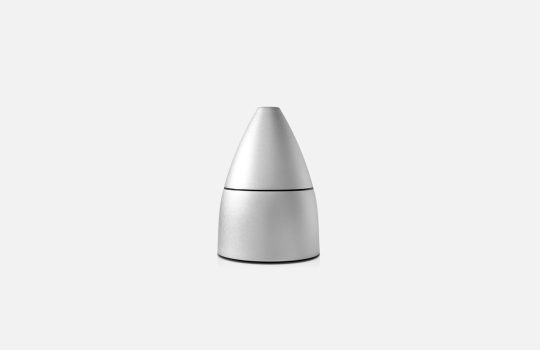
For a single living room, an Aromax, rated for 250 m³, is usually enough; a large open-plan ground floor where the kitchen opens into the living space needs the coverage of an AroSlim. In an open-plan home, put the diffuser at the far end of the living space, away from the cooker, and schedule it after meal times rather than during them. If you are scenting a majlis for guests, our guide to scenting the majlis covers timing around a meal.
Frequently asked questions
How do I stop cooking smells spreading through the house?
Catch them at the cooker and contain the rest. Cook on the back burners, run the hood on high from before you start until after you finish, keep the kitchen door closed, and open a kitchen window. Research on installed hoods found capture was much higher on back burners than front.
Why does my range hood not seem to work?
It may be moving less air than you think. A study of 15 installed devices found 10 delivered 70% or less of their advertised airflow, and flat-bottom microwave extractors captured much less than proper hoods. Clogged filters, low settings and front-burner cooking make it worse.
Does a recirculating hood remove smells?
Only partly. It filters grease and, with a charcoal filter, some odour, then blows the air back into the kitchen. It removes no air from the house, so ventilate through a window as well and replace the charcoal filter on schedule.
How do I get rid of the smell of fish after cooking?
Ventilate hard during cooking, then clean everything the fish touched straight away: boards, knives, the sink, the hob and the splashback. Take the bin out the same evening. If you have a second kitchen, cook fish there.
Should I use a diffuser in the kitchen?
Not while you cook. Fragrance does not remove cooking smells, and it competes with the food. Ventilate the kitchen first, then scent the living area or majlis on a schedule set after meal times.