Search for the best scent for studying and you will find confident lists: rosemary for memory, peppermint for alertness, lemon for focus, often with a percentage attached. Some of that traces back to real experiments. Much of it stretches them well past what they found. This is what the best-known studies actually measured, what they did not, and why the air in a study room matters more than what it smells of.
The rosemary study
The study behind most “rosemary for memory” claims was run by Mark Moss and colleagues at Northumbria University. 144 healthy adults were randomly assigned to complete a computerised cognitive test battery in a cubicle scented with rosemary, lavender, or nothing. Importantly, participants were misled about the purpose of the study until testing was over, to stop expectations colouring the results (International Journal of Neuroscience 113(1), 15–38, 2003).
The results were mixed in a way the popular summaries leave out:
- Rosemary significantly improved overall quality of memory and secondary memory — but it also slowed the speed of memory compared with the unscented group.
- Lavender significantly worsened working memory and slowed reaction times on both memory and attention tasks.
- After testing, the rosemary group felt more alert than both the control and lavender groups.
So the honest summary is: in one laboratory session, rosemary was associated with more accurate recall at the cost of slower recall, and lavender — the scent most often recommended for a calm study room — made people worse at holding information in mind.
The peppermint study
The same group repeated the design in 2008 with peppermint and ylang-ylang, again with 144 participants split across three conditions. Peppermint enhanced memory and increased alertness. Ylang-ylang impaired memory and lengthened processing speed, while making people significantly calmer (International Journal of Neuroscience 118(1), 59–77).
Read together, the two studies point in one direction: in these experiments, bright, sharp scents went with alertness and better recall, while soft, relaxing ones went with calm and worse cognitive performance. That is a useful rule of thumb for choosing a study-room scent. It is not a guarantee of anything.
Why expectation muddies all of this
Smell research has a persistent problem: people know what lavender is supposed to do. Howard and Hughes tested this directly with 96 women who relaxed after a stressful task in the presence of lavender, a placebo or no odour, after being told different things about what the aroma would do. The aroma itself had no effect on the physiological measure of relaxation. What people had been told did (British Journal of Health Psychology 13(4), 603–617, 2008).
Rachel Herz’s systematic review of the field reached a similar overall conclusion. Credible evidence exists that odours can affect mood, physiology and behaviour, but of the explanations available, a psychological one — learned associations and expectations — accounts for the data better than a drug-like effect of the scent. The review also attributed much of the conflicting evidence to inconsistent methods across studies (International Journal of Neuroscience 119(2), 263–290, 2009).
The Northumbria studies deserve credit for hiding their purpose from participants. Even so, each tested a single session, with around 48 people per condition, using pure essential oils at concentrations chosen for the laboratory. None followed students through a term.
The air matters more than the scent
The study room factor with the strongest evidence behind it has nothing to do with fragrance. It is ventilation.
At the Harvard T.H. Chan School of Public Health, Joseph Allen’s team had 24 office workers spend six full working days in a controlled office, blinded to the conditions. On days that simulated a well-ventilated building with low levels of volatile organic compounds, cognitive scores were on average 61% higher than on the conventional-building day, and 101% higher on the days with added outdoor air. Carbon dioxide and VOCs were each independently associated with the scores (Environmental Health Perspectives 124(6), 805–812, 2016).
An earlier study by Satish and colleagues, including researchers from Lawrence Berkeley National Laboratory, isolated carbon dioxide alone. With ventilation and temperature held constant, raising CO₂ from 600 to 1,000 ppm produced moderate, significant drops in six of nine scales of decision-making performance, and 2,500 ppm produced large drops in seven (Environmental Health Perspectives 120(12), 1671–1677, 2012). The authors called for confirmation, and that caution is fair. But the direction is consistent.
This matters in a Saudi home because a study room is usually a bedroom with the door shut and the air conditioner recirculating the same air for hours. Exhaled CO₂ builds up in exactly that arrangement. Opening the door, running the room’s fresh-air supply if it has one, or taking a break to air the room will do more for a long evening of revision than any fragrance. The broader point about heat and air quality in sealed Gulf homes is made in our article on home fragrance in the Saudi climate.
If you scent a study space anyway
Done sensibly, a scent can make a study corner feel distinct from the rest of the room, and the alertness findings give some reason to choose carefully. The rules we would follow:
Choose bright over soft
The experiments point towards sharp, fresh profiles for focus and away from relaxing ones. In our collection that means the citrus, green and tea families rather than heavy florals or warm ambers, which belong in the evening. Our guide to fragrance families describes each one. Our blends are not single essential oils, so do not expect them to reproduce a rosemary or peppermint study.
Keep it faint
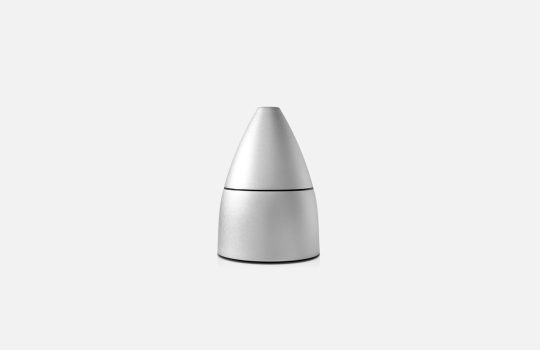
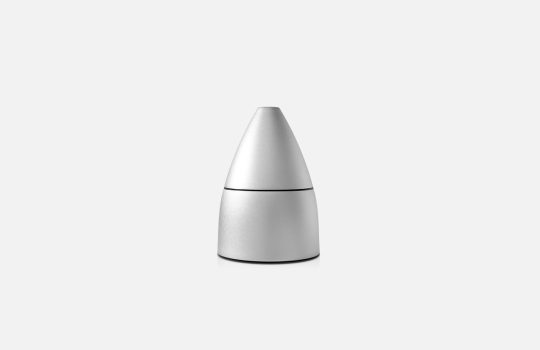
A scent you are aware of is a distraction. Set the diffuser so the room smells of something when you walk in, then let adaptation take it into the background. A compact unit such as the Aromax, rated to 250 m³, is far more than a single bedroom needs at full output, so use the lowest setting and the timer.
Do not count on the exam-hall trick
A popular idea is to study with one scent and wear it during the exam, so the smell acts as a memory cue. There is real research behind context-dependent memory with odours: in one experiment, recall improved when the same distinctive scent was present during both learning and testing, and not when it was present at only one stage (Memory & Cognition 25(3), 375–380, 1997). But you cannot diffuse anything in an exam hall, and wearing a strong scent among other candidates is inconsiderate. Treat it as an interesting finding, not a strategy. The memory side of scent is covered properly in scent and memory.
Respect the people around you
A study corner in a shared bedroom or family living area scents the people who are not studying too. Anyone with asthma or a fragrance sensitivity should read is scent diffusion safe before a diffuser runs for hours beside them.
What we will not claim
We will not tell you a fragrance will raise your grades, improve your memory or help a child concentrate. The studies do not support that, and our workplace guidance takes the same line — see our office scenting guide. What we can say is narrower: a fresh, faint scent in a well-ventilated room makes a pleasant place to work, and the ventilation is the part doing most of the work.
Frequently asked questions
What is the best scent for studying?
Laboratory studies associate bright, sharp scents such as rosemary and peppermint with alertness and better recall, and soft, relaxing ones such as lavender and ylang-ylang with calm and poorer memory performance. If you scent a study space, choose a fresh citrus, green or tea profile and keep it faint.
Does rosemary really improve memory?
In one study of 144 adults, rosemary aroma improved overall quality of memory but slowed the speed of memory compared with no scent. It was a single laboratory session using pure essential oil, so it does not show that rosemary improves memory in everyday studying.
Is lavender good for studying?
The evidence points the other way. In the same study, lavender significantly impaired working memory and slowed reaction times. Lavender suits winding down in the evening better than a study session.
Does ventilation affect concentration?
Yes, and the evidence is stronger than for any fragrance. In a Harvard study, cognitive scores were 61% higher in low-pollutant conditions and 101% higher with extra outdoor air than in conventional office conditions. In a closed bedroom, open the door or air the room regularly.
Can I use a scent to help remember material in an exam?
Odour-cued recall works in experiments only when the same scent is present at both learning and testing, which is not practical in an exam hall. Do not rely on it, and do not wear a strong scent where other candidates have to sit near you.