Aroma Oils vs Essential Oils: What Is Actually in the Bottle
Search for whether it is safe to run a diffuser all day and you will get confident answers to a different question: essential oils on a newborn’s skin, bakhoor smoke in a closed room, alcohol perfume sprayed on the neck. None of those describes a cold-air diffuser running an aroma oil in a living room or a reception. Before the safety question can be answered honestly, the bottle has to be identified — and there are two very different things people call diffuser oil.
Two products, one name
Essential oils
An essential oil is made of molecules extracted from a plant, and nothing else. Because the composition is whatever the plant produced that season, essential oils vary batch to batch, and as our own FAQ puts it, they tend to be stronger and more volatile than a blended fragrance.
Aroma oils
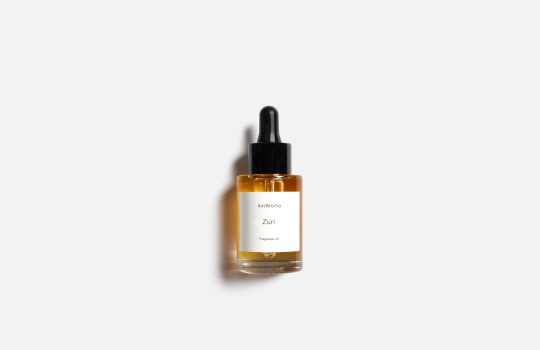
An aroma oil is a fragrance designed specifically for air care. It contains natural materials — essential oils and absolutes among them — alongside synthetic scent molecules chosen to do a particular job: hold a note steady for weeks, carry evenly through a large room, behave predictably in an atomiser. This is what Air Aroma supplies, and our fragrances contain no alcohol and no carrier oils.
Natural does not mean gentler
This is where most of what you read has it backwards. “Natural” is a description of origin, not of safety. Essential oils are among the more potent materials in the category precisely because they are concentrated plant chemistry, and a synthetic molecule selected for a known profile is often the more predictable choice, not the compromise.
The useful question is not natural versus synthetic. It is whether the finished fragrance — the actual blend, at the concentration you will actually be exposed to — has been assessed against a standard. That is a question about testing, and it has an answer.
What the IFRA standard covers
The International Fragrance Association sets the safety standards the fragrance industry works to, covering which materials may be used, at what concentrations, and in what kind of product. Our fragrances are certified to those standards, and the certification is specific: they are assessed for diffusion into air, which is why the same FAQ states plainly that they are not to be sprayed on skin. A fragrance cleared for one use is not automatically cleared for another, and any supplier who blurs that distinction is telling you less than they should.
Two further facts sit on that page rather than in our marketing: the fragrances are free of harmful volatile organic compounds, and diffusion delivers scent at a low level rather than a concentrated dose. Both are worth reading in the original.
What we will not claim
We do not make therapeutic claims. Ambient scenting is not a treatment for anything, and a company selling diffusers is not the right source for a medical answer. Our FAQ says that some people may be sensitive to certain scents, although this is uncommon, and that is the honest version — not a promise that nobody ever reacts.
So: if you have asthma, a diagnosed fragrance allergy, a respiratory condition, or you are pregnant and unsure, ask your doctor rather than a fragrance company. That is not us avoiding the question. It is the only answer anyone in our position can responsibly give.
Practical points that actually matter
Intensity is the real lever
Almost every complaint about a diffuser being “too much” is a settings problem. Set the output so the scent is noticeable when you walk in and recedes afterwards, and ventilate normally. In a workplace, the same logic applies with the volume turned further down, which we cover in our guide to scenting an office.
Storage in a Saudi climate
Fragrance keeps roughly two years stored properly: room temperature, out of direct sunlight, tightly closed. In practice the failure mode here is heat — a bottle left in a parked car or on a sunlit windowsill degrades faster than the shelf life suggests. Keep spares in a cupboard, not on display.
Other brands’ oils
Oils formulated for water-based diffusers have a different viscosity and do not atomise the same way in a cold-air unit. Using non-Air Aroma fragrance also voids the two-year warranty, which is stated in the FAQ rather than buried in small print. Our diffuser care guide covers the rest of the routine.
Choosing on evidence rather than adjectives
If you are deciding between fragrances, the adjective on the label tells you very little. Work from the fragrance families instead, and test before you commit — we send samples on paper free of charge, which is a better basis for a decision than any description, ours included. The full fragrance range comes in 30 ml for the Aromax and 450 ml for the AroSlim.
Frequently asked questions
What is the difference between aroma oils and essential oils?
Essential oils are made only of molecules extracted from plants. Aroma oils are blends designed for air care, combining natural materials such as essential oils and absolutes with synthetic scent molecules chosen for stability and predictable diffusion. Air Aroma supplies aroma oils.
Are essential oils safer because they are natural?
Not inherently. Natural describes origin, not safety, and essential oils are typically stronger and more volatile than a blended fragrance. What matters is whether the finished product has been assessed against a recognised standard for the way it is used.
Can I use essential oils in an Air Aroma diffuser?
We do not recommend it. Our fragrances are formulated for the viscosity and atomisation behaviour of our devices, and using another brand’s fragrance voids the two-year warranty.
Is it safe to diffuse around children, or during pregnancy?
That is a question for your doctor, not for us. What we can tell you is that our fragrances are certified to IFRA standards for diffusion into air, contain no alcohol or carrier oils, and are not intended for skin contact.
How should fragrance oil be stored in Saudi heat?
At room temperature, out of direct sunlight, with the cap closed tightly. Avoid leaving bottles in a car or on a sunny windowsill; heat shortens the roughly two-year shelf life more than anything else.