Home Odours: Why You Stop Noticing Them and How to Fix the Cause
A guest walks into your house, says something about the smell, and you have no idea what they mean. You have been breathing that air since morning. This is the most useful thing to know about home odours: you are the worst-placed person in the building to judge them, and it has nothing to do with your sense of smell.
Why your nose switches off
The effect is called olfactory adaptation, and it is fast — a constant smell fades from awareness within minutes. Your brain is built to report change, so anything that stays the same is filtered out. The smell has not gone anywhere; your receptors have stopped forwarding it.
It cuts both ways. It is why you cannot smell the shoe cupboard or last night’s frying while a visitor notices both in three seconds, and it is why people set up a diffuser and decide two weeks later that it has stopped working. Our diffuser care guide gives the same advice: ask someone who has just walked in before you change a setting.
The reset is free. Step outside for ten to fifteen minutes and walk back in without thinking about it. That first breath is roughly what your home smells like to everyone else.
Fragrance does not remove an odour
Search for how to get rid of a smell in the house and most of the Arabic results — largely written by cleaning companies — will tell you that reaching for bakhoor or an air freshener is a mistake. On that specific point they are right, and we sell diffusers for a living.
Adding a scent to a room that smells of damp does not cancel the damp. You get both at once, and the combination is usually worse than the original. A diffuser is for air you have already decided you like — the last step, not the first.
Where the smell is actually coming from
The floor drain nobody thinks about
Every bathroom and laundry floor drain holds a small pool of water in its trap, and that water is the only thing separating the room from the drainage system. In a Saudi summer, in a bathroom that is rarely used — the guest shower, the laundry room — it evaporates within days and leaves an open pipe. The result is an intermittent sewer smell with no obvious source. Pour a cup of water down every unused drain once a week and it disappears.
The air conditioner
If the smell arrives in the first minute after the AC starts and then fades, it is in the unit rather than the room. Split-unit filters collect dust, and the condensate tray and coil stay damp. Wash the filters monthly through the cooling season. No amount of fragrance fixes a musty coil, because the coil is upstream of the whole room.
Fabric, and the majlis
Air clears on its own; fabric does not. Bakhoor smoke, shisha and frying oil settle into curtains, floor seating, cushions and carpet, then release slowly for weeks. If your home smells of last Friday’s gathering, the smell is in the textiles, and the answer is washing and airing them rather than scenting over them — worth knowing before you blame the bakhoor itself, which we look at in bakhoor, oud and modern diffusers.
Kitchen, bin and damp
Kitchen odours are cumulative: frying oil coats the extractor filter, and the bin and sink drain contribute more than people expect. Damp is the other repeat offender, and on the coast in Jeddah and the Eastern Province it is the main one — laundry left in the drum overnight, towels folded while wet, a leak under a sink. Musty is worth taking seriously rather than masking; it usually means something is growing.
Ventilating when it is 45 degrees outside
“Open the windows” is advice written for a different climate. The practical version here is ten minutes of cross-flow early in the morning or after sunset, with two openings on opposite sides so the air actually moves. The rest of the year, extractor fans do more real work than any window — and a split air conditioner recirculates the same air rather than replacing it. It cools; it does not ventilate.
Then, and only then, scent the room
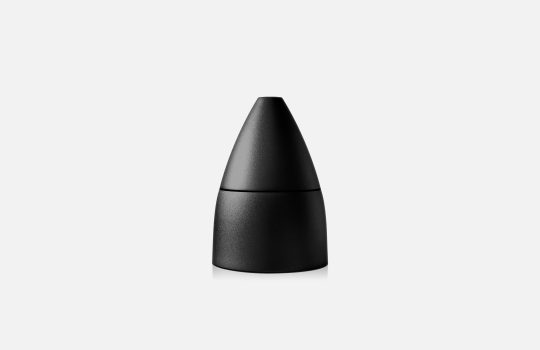
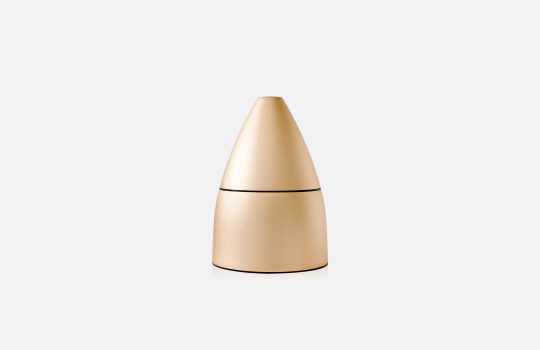
Once the base is neutral, fragrance behaves the way it should: it reads as your home rather than as a product covering something. Set the output so the scent is noticeable when you walk in and recedes a few minutes later. Our room-by-room guide covers layering a diffuser with room sprays and candles, and the sizing guide matches the unit to your volume — an Aromax covers 250 m³, an AroSlim 1,000 m³.
If you find yourself raising the intensity every week, stop. That is adaptation, not a fault, and chasing it ends with a home that everyone except you finds overpowering. Changing fragrance every few months works better — not because the oil degrades, but because a new scent is something your brain has not learned to ignore yet. Choosing by fragrance family helps, and we send paper samples free.
Frequently asked questions
Why can I not smell my own home?
Because of olfactory adaptation: your brain filters out constant background smells within minutes so it can notice new ones. The odours you live with become invisible to you while staying obvious to a visitor. Step outside for ten to fifteen minutes and walk back in to reset it.
Will a diffuser get rid of a bad smell?
No. A diffuser adds fragrance; it does not remove an odour or its source. If a room smells of damp, smoke or drainage you end up with both smells at once. Deal with the cause first, then scent the space.
What causes a sewage smell in a bathroom nobody uses?
Usually a dried-out floor drain. The trap holds water that blocks drain gases, and in summer heat it evaporates within days when the drain is not used. Pouring a cup of water into each unused drain weekly keeps the seal intact.
Why does my house smell musty when the air conditioner starts?
Because the odour is in the unit rather than the room — dust in the filters, moisture in the coil and condensate tray. The giveaway is timing: it appears in the first minute of operation and fades. Clean the filters monthly and service the unit before summer.
How do I get the smell of bakhoor or cooking out of a majlis?
Treat the textiles, not the air. Smoke and cooking oil settle into curtains, cushions and carpet and release for weeks, so wash or air what can be washed, vacuum upholstery thoroughly, and ventilate in the cooler hours before adding fragrance back.