The first thing a resident smells when they come home is not their own flat. It is the tower lobby, the lift landing and the corridor outside their door, and in most Saudi residential buildings those shared spaces belong to everyone and are looked after by no one in particular. Property managers and owners’ associations ask us whether scenting the entrance is worth doing. It can be, but only after the building has dealt with what the lobby already smells of, and only in the parts of the building where residents pass through rather than live. This guide covers both.
Who actually decides
In a tower or compound with many owners, the shared areas are usually run by an owners’ association. The Real Estate General Authority’s Mullak platform exists to set these up. REGA describes it as helping owners organise “facility management and shared spaces—such as entrances, elevators, and corridors”, and at the end of 2023 it reported more than 36,000 associations covering over 160,000 units. That matters for scenting because the decision is collective. A fragrance in a hotel lobby is chosen by the brand. A fragrance in a residential lobby is something every household walks through several times a day, for years, and has a vote on. Plan for that from the start.
Why a lobby smells the way it does
Before choosing any fragrance, walk the building at the times residents complain and find the sources. In our experience they are almost always the same four.
The car park
Many towers put the main lift lobby directly above or beside a basement car park. Every time the lift or a stair door opens, exhaust-laden air can be drawn up into the lobby. This is a ventilation problem, and it is also a safety one. Never use fragrance to cover a car-park smell: the smell is the warning, and the fix is extraction and door closers.
Refuse rooms and chutes
A refuse chute is a vertical duct running through every floor. A door that does not close fully, or a chute room without working extraction, will scent the corridors better than any diffuser can, and in the wrong direction.
Other people’s cooking
Residents often assume corridor cooking smells come in under one neighbour’s door. The air movement is more general than that. A study published in Indoor Air in 2011 by David Bohac and colleagues (volume 21, issue 1, pages 36–44) used tracer gases to measure how much air moves between units in six multi-unit buildings. The median share of air entering a flat that had come from other tagged units was 4.1%, ranging from 2.1% in a new condominium building to 35.3% in an old duplex. Sealing gaps and adding continuous exhaust cut that transfer by a median of 29%, and the authors concluded it can be reduced but not eliminated without rebuilding. Their study was in a cold US climate, so the numbers will not transfer directly to an air-conditioned tower in Riyadh or Jeddah. The principle does: air leaks between flats and corridors through every gap, and a diffuser in the lobby cannot outrun a leak on the twelfth floor.
The lobby itself
Damp entrance mats, a cleaning product that is too strong, a water feature that has not been cleaned, a sofa that has absorbed years of visitors. These are cheap to fix and they come first. Our article on why you stop noticing smells explains why the building’s own staff are usually the last people to notice them.
What scent can reasonably do
Once the sources are dealt with, a light fragrance in the entrance does two things. It tells a returning resident or a visitor that the building is looked after, and it gives a large hard space some character. There is one well-known study worth knowing here. In 2005 Rob Holland, Merel Hendriks and Henk Aarts published Smells Like Clean Spirit in Psychological Science (volume 16, issue 9, pages 689–693). Participants exposed, without being told, to the smell of a citrus all-purpose cleaner thought about cleaning more readily, and in the third study kept their table cleaner while eating a crumbly biscuit. They were not aware of the influence.
It is a tempting finding for a building manager, so read its limits. The participants were students in a laboratory, the scent was a cleaning product rather than a fragrance, and the behaviour was tidying crumbs during one snack. It does not show that a scented lobby makes residents litter less. What it supports is a modest point: a clean, fresh smell is associated with cleanliness, and a building that smells clean is read as one that is kept clean.
The evidence on strength points the other way from instinct. A 2020 meta-analysis in the Journal of Marketing by Holger Roschk and Masoumeh Hosseinpour found that the effects of ambient scent are nonlinear: beyond a moderate level, more fragrance does not help. We discuss that study in our article on whether scent marketing works. In a residential lobby, where nobody chose to be exposed, the case for staying low is even stronger.
Which zones to scent, and which to leave alone
The main entrance and reception
This is the one zone worth doing in almost every building. It is where people arrive from outside, so they smell it fresh, and it is usually the largest single volume, which keeps the concentration low.
Lift landings, not lift cars
A lift car is a sealed box of about ten cubic metres that people cannot leave until the doors open. Even a small amount of fragrance becomes strong very quickly, and it lingers on whoever rides in it. Put the diffuser on the ground-floor landing, where the scent drifts into the car each time the doors open and then clears.
Residential corridors
Leave them unscented, or nearly so. A corridor is effectively the front step of each flat, and a resident who dislikes the fragrance has no way to avoid it. The Bohac study is a reminder that corridor air also moves into flats. If one floor has a persistent problem, solve the problem rather than scenting over it.
The clubhouse, gym and majlis
Compound amenities are rooms people choose to use, which makes them better candidates. Gyms need odour control first, as we explain in our gym scenting guide, and a residents’ majlis follows the same hospitality logic as the one in our majlis guide.
Car-park entrances, stairwells and plant rooms
Never. Masking exhaust or a fault smell in these spaces hides exactly the information people need.
Residents are not customers
Everything that applies to scenting a shop applies here more strictly. A shopper who dislikes a smell leaves. A resident walks through it four or five times a day. Some of them will have asthma, migraines or a newborn, and our article on scent diffusion safety covers who reacts and how. So choose something simple and fresh: a clean citrus, a green tea or a soft white floral. Avoid heavy, warm notes in a busy entrance. Research we describe in our showroom scenting guide found that warm scents such as cinnamon and vanilla make a space feel more crowded. Set the level by asking someone who has just walked in from outside, not the security guard who has been there since six.
Sizing and running hours
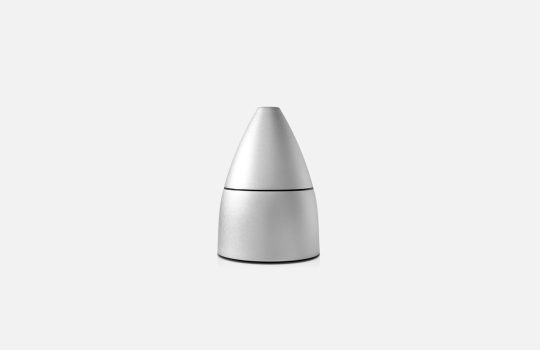
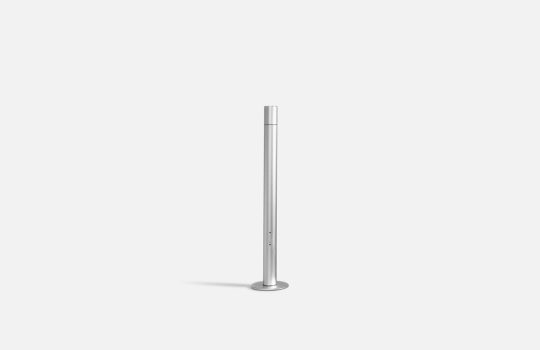
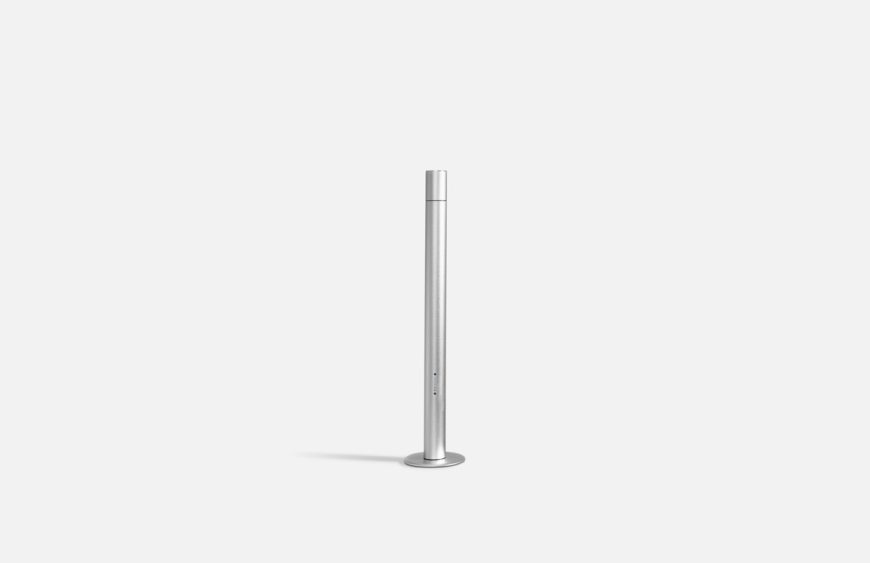
Work in cubic metres. A tower lobby of 12 by 8 metres with a 4.5-metre ceiling holds about 430 m³. That is well inside the 1,000 m³ rating of an AroSlim, which you then run below capacity. A smaller entrance of 6 by 5 metres at 3 metres is about 90 m³, comfortably within the 250 m³ of an Aromax. A compound with several buildings, or a tower where the owners want every floor treated, is usually better served through the air-conditioning system, which our HVAC integration guide covers. Our diffuser sizing guide walks through the arithmetic.
Run the diffuser on the building’s rhythm. The busy windows are the morning departure and the evening return, so a timer covering roughly 6 to 10 in the morning and 4 to 11 at night does most of the work and halves oil use against round-the-clock running. Switch it off overnight. The store’s own FAQ gives a refill interval of about two months for an AroSlim in daily use. Our article on what scenting costs shows how to turn that into a monthly figure for the association’s budget.
Getting it approved
A fragrance that half the building did not want will be switched off within a month, usually by unplugging it. Avoid that by treating it as an association decision from the start. Fix the source odours first and say so, because residents will rightly ask. Propose one zone, the main entrance, with one or two candidate scents, and run a trial of four weeks. Give residents a simple way to comment, and agree in advance that the unit will be turned down or off if a resident has a medical reason. At the end of the trial, ask the residents rather than the committee. If they did not notice anything, the level is probably right.
Scenting a commercial space?
Tell us your floor area and the type of venue, and one of our scent consultants will come back to you within one business day with a system recommendation, fragrance options and the monthly running cost — in writing, with no obligation.
Frequently asked questions
Should a residential building lobby be scented?
It can be, once the building’s own odours are dealt with. The main entrance is worth scenting in most towers and compounds because people arrive from outside and smell it fresh. Residential corridors, car-park entrances and stairwells should be left unscented.
Can we put a diffuser inside the lift?
We advise against it. A lift car holds about ten cubic metres and people cannot leave it, so the fragrance becomes strong very quickly and clings to whoever rides in it. Scent the ground-floor lift landing instead, and let a little drift in each time the doors open.
Will fragrance cover cooking smells in the corridors?
Not reliably. Cooking smells travel between flats and corridors through gaps in the building, and research in multi-unit buildings found sealing can reduce that air transfer but not eliminate it. Improve the corridor extraction and seal obvious gaps first, then decide whether any fragrance is still needed.
What size diffuser does a tower lobby need?
Multiply length by width by ceiling height. A lobby of about 430 m³ sits comfortably within an AroSlim’s 1,000 m³ rating, while a small entrance under 250 m³ suits an Aromax. Run either below its maximum and use a timer for the morning and evening peaks.
How should an owners’ association decide on a building scent?
Treat it as a shared decision. Fix source odours first, trial one zone for about four weeks with one or two fresh scents, give residents a way to comment, and agree that the unit is turned down for anyone with a medical reason. Judge the trial by residents’ feedback, not the committee’s preference.