A supermarket is the hardest retail space to scent well, because much of what it sells already smells. Fresh bread, roasting coffee, ripe fruit, spices, the fish counter and the cleaning aisle all compete for the same air. Hypermarket and grocery operators in Riyadh, Jeddah and the Eastern Province ask us whether ambient fragrance helps in that setting, and where it should go. The research gives a more interesting answer than “pump bakery smell at the door”, and it changes where a diffuser belongs. This guide covers what the studies found, which zones to scent and which to leave alone, and how to test it in your own stores.
What the research says about scent and food shopping
How long shoppers smell it changes what they buy
The most directly relevant study is Dipayan Biswas and Courtney Szocs’s The Smell of Healthy Choices, published in the Journal of Marketing Research in 2019 (volume 56, issue 1, pages 123–141). In a series of experiments, including field studies in a supermarket and a school cafeteria, extended exposure of more than two minutes to an indulgent food scent, such as cookies, led people to buy fewer unhealthy foods than either no scent or a non-indulgent food scent such as strawberry. The authors’ explanation is that smelling a rewarding food for long enough partly satisfies the craving for it. With brief exposure of under 30 seconds, the effect reversed.
For a grocer, that has a practical consequence. The same food scent can push baskets in opposite directions depending on how long shoppers spend in it. A smell at an entrance that people pass through in seconds behaves differently from the same smell in an aisle where they linger. Scent is not a single lever you turn up; where you put it, and how long people stay there, is part of the decision.
Congruent scents stay persuasive; mismatched ones get discounted
Anick Bosmans studied when ambient scent affects how people judge products (Journal of Marketing 70(3), 32–43, 2006). Scents that were congruent with the product kept influencing evaluations even when shoppers noticed the scent or were motivated to correct for outside influences. Scents that did not fit were corrected for once their influence became obvious. In a supermarket, that argues for matching the scent to the zone: a fresh linen note in household and laundry, something clean and soft in baby care, and nothing that pretends to be food where real food is on the shelf.
Simple beats elaborate
Andreas Herrmann and colleagues compared a simple scent with a complex blend in a store and found the simple one was associated with higher sales (Journal of Retailing 89(1), 30–43, 2013). Their explanation is processing fluency: a scent that is easy to process leaves more attention for shopping. For a large store with many competing smells, that is another reason to choose one clean, uncomplicated profile rather than a signature blend with ten notes.
What the wider evidence supports
The largest review of the field, Holger Roschk and Masoumeh Hosseinpour’s meta-analysis in the Journal of Marketing (84(1), 125–145, 2020), pooled 671 effects and found pleasant ambient scent lifted customer responses by roughly 3% to 15%, with effects on spending around 3% on average. It also found the relationship with concentration is not linear: more scent is not reliably better. We go through that evidence, and the industry figures that do not survive it, in does scent marketing actually work?
Where scent belongs in a supermarket
Leave the fresh departments alone
Do not add fragrance to the bakery, produce, butcher, fish counter, deli or hot food. Their own smell is the merchandising, and an added scent there either fights it or makes shoppers wonder what it is covering. Keep diffusers well away from open, unpackaged food and any food-preparation area as a matter of hygiene.
Scent the non-food aisles
Household, laundry, personal care, baby care and home goods are the natural place to start. Shoppers browse there, the products have no smell of their own on the shelf, and a congruent scent fits Bosmans’s findings. These aisles are often where a hypermarket sells its higher-margin non-food lines.
Checkouts, customer service and restrooms
Queues are where shoppers stand still for longest. A light, calm scent near the checkouts and the customer service desk is the same problem as any waiting area, which we cover in scenting waiting areas. Customer restrooms and prayer rooms are worth scenting for a simpler reason: shoppers judge the whole store by them.
The entrance, used with care
The entrance is the first impression, but shoppers pass through it in seconds, which is the brief-exposure condition in the Biswas and Szocs study. A clean, non-food scent at the doors signals a well-kept store without nudging food choices in a direction you did not intend.
Fix the store’s own odours first
A diffuser will not hide a fish counter that smells at closing time, a waste room behind the bakery, a cardboard compactor by the loading bay, or a floor-cleaning chemical that hangs in the air. Shoppers notice these immediately, even when staff no longer do. Fix drainage, waste handling and extraction first, then scent. The same rule runs through every commercial guide we publish, from restaurants and cafés to gyms.
Equipment for large stores
A hypermarket is mostly volume: high ceilings, long aisles and open refrigerated cases that create their own cold air currents. That makes the zone approach more practical than trying to scent the whole store.
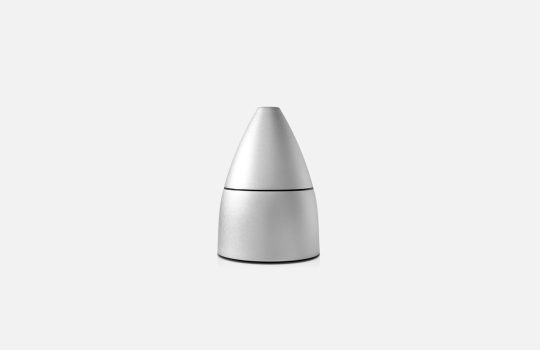
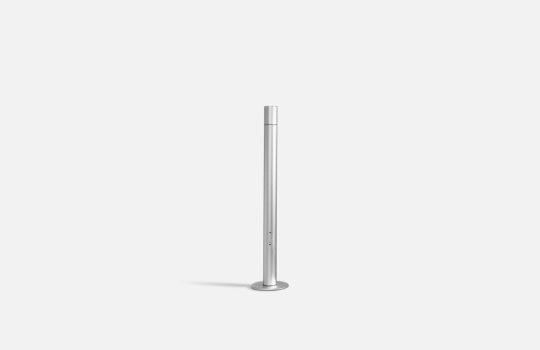
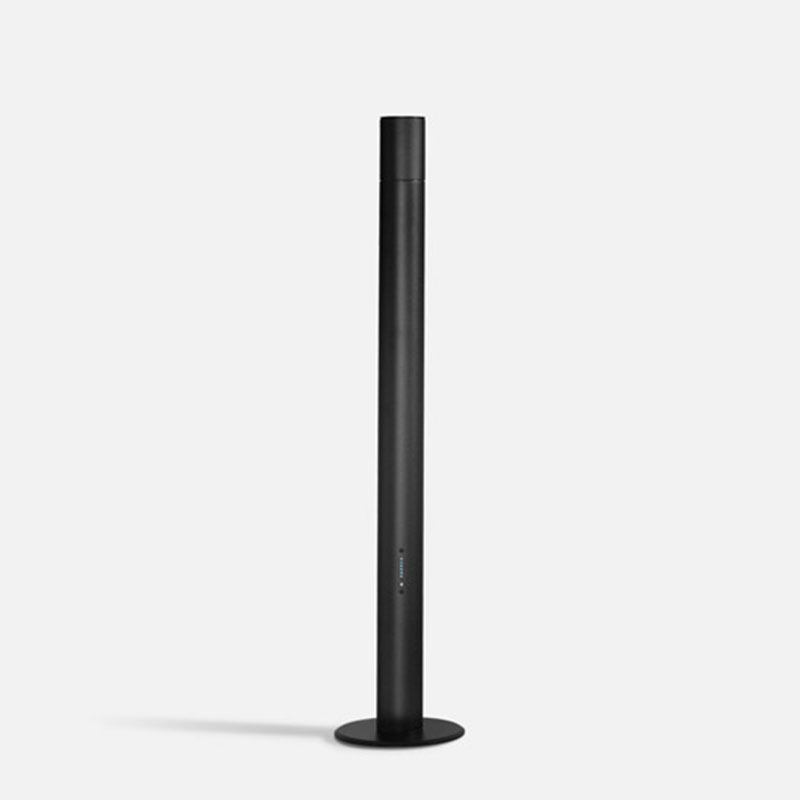
- A non-food aisle block, checkout zone or customer service area can be covered by standalone units. An AroSlim is rated for 1,000 m³; an Aromax, rated for 250 m³, suits restrooms, prayer rooms and small express stores.
- Remember that height counts. A 400 m² aisle block with a 6 m ceiling is 2,400 m³, not a room. Our sizing guide shows how to work it out.
- Where whole-store coverage matters, scenting through the air-handling system is often more practical than many standalone units; see HVAC scent integration.
- Run the diffusers on a schedule that follows opening hours, with the lowest setting that staff can still notice on arrival.
Choosing the fragrance
Choose one simple, clean scent for the non-food zones, and avoid food notes entirely unless you have a deliberate reason and have read the dwell-time findings above. Citrus, white tea, soft cotton and light green notes read as fresh and clean without suggesting food. Our guide to choosing a scent for your business explains how to go from the impression you want to a fragrance family.
How to test it in your own stores
Grocery is unusually easy to measure, because you already record every basket. Run a trial in one store, or in one zone, for four weeks with the scent on and compare it with matched weeks without it. Better still, use two similar stores, one scented and one not. Look at sales in the scented categories, average basket value and the number of items per basket, and check whether customer complaints mention smell either way. Keep the comparison honest: Ramadan, salary weeks, school holidays and promotions all move grocery sales far more than any scent. Our cost guide helps you set the trial budget against what the scented zones sell.
What we will not claim
We will not promise a sales uplift. The peer-reviewed effects are real but modest, they depend on the scent fitting the setting, and none of the studies above was carried out in a Saudi supermarket. We will not recommend scenting fresh food departments. And we will not tell you that a bakery smell at the door is a proven way to sell more, because the best evidence on food scents says the result depends on how long shoppers stay in it.
Scenting a commercial space?
Tell us your floor area and the type of venue, and one of our scent consultants will come back to you within one business day with a system recommendation, fragrance options and the monthly running cost — in writing, with no obligation.
Frequently asked questions
Does scent marketing work in supermarkets?
It can, modestly. A 2019 Journal of Marketing Research study with a supermarket field test found food scents changed what shoppers bought, and a 2020 meta-analysis found pleasant scents lifted customer responses by about 3–15%. Results depend on the zone, the scent and how long shoppers stay.
Should a supermarket pump bakery smell at the entrance?
Not without thinking about dwell time. Research found that more than two minutes of an indulgent food scent reduced unhealthy purchases, while under 30 seconds reversed the effect. A clean, non-food scent at the entrance is the safer choice.
Which areas of a grocery store should be scented?
Non-food aisles such as household, laundry, personal care and baby care, plus checkouts, customer service, restrooms and prayer rooms. Leave the bakery, produce, butcher, fish, deli and hot food alone, and keep diffusers away from open food.
What scent should a supermarket use?
One simple, clean scent such as citrus, white tea or soft cotton. Research found simple scents outperformed complex blends in store, and that scents matching the products keep their influence. Avoid food notes near real food.
How do I measure whether scenting is working in my store?
Run a four-week trial in one store or zone and compare it with matched unscented weeks or a similar unscented store. Track category sales, basket value and items per basket, and allow for Ramadan, salary weeks and promotions.